

 English
 العربية

Petrol & Light Distillate
Petrol & Light Distillate Testing
Supporting Fuel Quality and Reliable Performance
The quality and composition of petrol and light distillates influence their performance, handling characteristics, and suitability for engines and industrial applications. Laboratory testing provides essential data for evaluating fuel properties, identifying contamination, and assessing conformity with product specifications and applicable regulatory requirements.
ETLCO’s Oil & Gas Laboratory offers quality testing services for petrol, naphtha, and other light distillates. Our analyses help clients verify product quality, monitor consistency between batches, and investigate concerns that may affect storage, processing, or end use.
Our Petrol and Light Distillate Testing Capabilities
Density, Relative Density & API Gravity
Measurement of key physical properties used to characterize petroleum products, compare batches, and support quantity calculations and specification checks.
Detailed Hydrocarbon Analysis
Analysis of individual hydrocarbons and hydrocarbon groups to characterize product composition and support quality assessment, blending decisions, and investigation of composition changes.
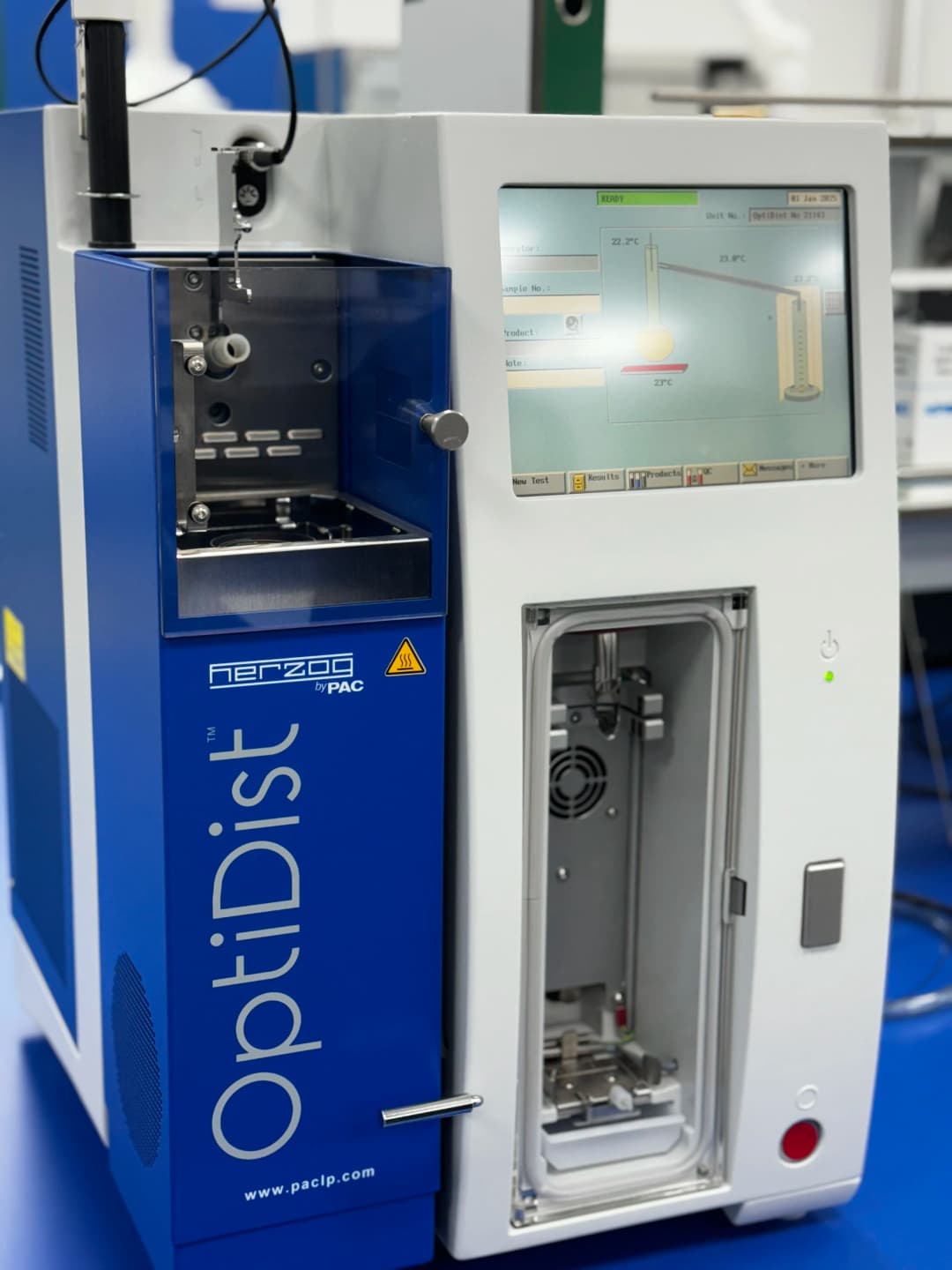
Distillation Characteristics
Evaluation of the temperatures at which different fractions of the product evaporate under specified test conditions. Results help characterize volatility and assess suitability for the intended application.
Electrical Conductivity
Measurement of the fuel’s ability to dissipate electrical charge, providing information relevant to electrostatic charge management during transfer and handling.
Flash & Fire Points
Determination of ignition-related temperature characteristics where appropriate for the product and applicable test method. Results support assessment of handling and storage requirements.
Gum Content
Measurement of gum content under specified test conditions to help assess the potential for deposits that may affect fuel systems and equipment performance.
Mercaptan Sulfur
Determination of mercaptan sulfur content to support product quality assessment and verification against specified limits.
Octane Number
Evaluation of petrol’s resistance to engine knocking, supporting fuel-grade verification and comparison with engine and product requirements.
Oxygenates
Identification and measurement of oxygen-containing compounds in fuel to assess blend composition and conformity with applicable specifications.
Sulfur by ED-XRF
Measurement of sulfur content using energy-dispersive X-ray fluorescence, where suitable for the sample and required reporting range. Results support fuel quality verification and sulfur specification checks.
Water & Sediment
Assessment of water and sediment contamination that may affect product quality, storage, and fuel-system operation.
Water by Karl Fischer Titration
Determination of water content using Karl Fischer titration to help identify moisture contamination and assess conformity with product requirements.
The selection of parameters, test methods, and reporting limits depends on the product type and applicable specifications. Additional testing requirements can be discussed with our laboratory team.
Applications
Our petrol and light distillate testing services support:
Quality verification of petrol, naphtha, and light petroleum distillates.
Refinery production and blending operations.
Incoming product inspection and supplier evaluation.
Fuel storage, distribution, and batch acceptance.
Assessment of feedstock suitability for industrial processing.
Investigation of suspected contamination or variations in fuel quality.
Verification against contractual and applicable regulatory specifications.
Benefits of Petrol and Light Distillate Testing
A suitable testing program helps clients:
Verify fuel properties and composition before use or distribution.
Monitor consistency across production and supply batches.
Identify water, sediment, and other quality concerns.
Support blending, procurement, and product acceptance decisions.
Investigate fuel-related performance issues.
Provide analytical evidence for conformity assessments.