

 English
 العربية
Industrial Hygiene Air Sampling
Industrial Hygiene Air Sampling Services
Understand workplace exposures. Identify airborne hazards. Support a healthier working environment.
Environmental Testing and Laboratories Company (ETLCO) provides industrial hygiene air sampling services to help organisations assess airborne contaminants, evaluate worker exposure, and review the effectiveness of workplace controls.
Since 2009, ETLCO has supported industrial monitoring programmes with sampling approaches tailored to site activities, target contaminants, and assessment objectives.
Our services combine personal and area sampling, suitable measurement equipment, laboratory analysis where required, and clear technical reporting to support occupational health and safety decisions.
Workplace Air Monitoring That Supports Your Operations
Airborne contaminants may arise from production processes, chemical handling, combustion, material transfer, cleaning, and maintenance activities. Exposure can vary between locations, tasks, and operating conditions.
ETLCO helps clients develop monitoring programmes that address these differences and provide data relevant to the work being assessed.
Our services support:
Identification and assessment of airborne workplace contaminants.
Evaluation of employee exposure during selected tasks or shifts.
Comparison with applicable occupational exposure limits.
Assessment of ventilation and other exposure control measures.
Investigation of workplace air quality concerns.
Follow-up monitoring after corrective actions or process changes.
Documentation for internal reviews, audits, and relevant reporting requirements.
Personal Exposure Monitoring
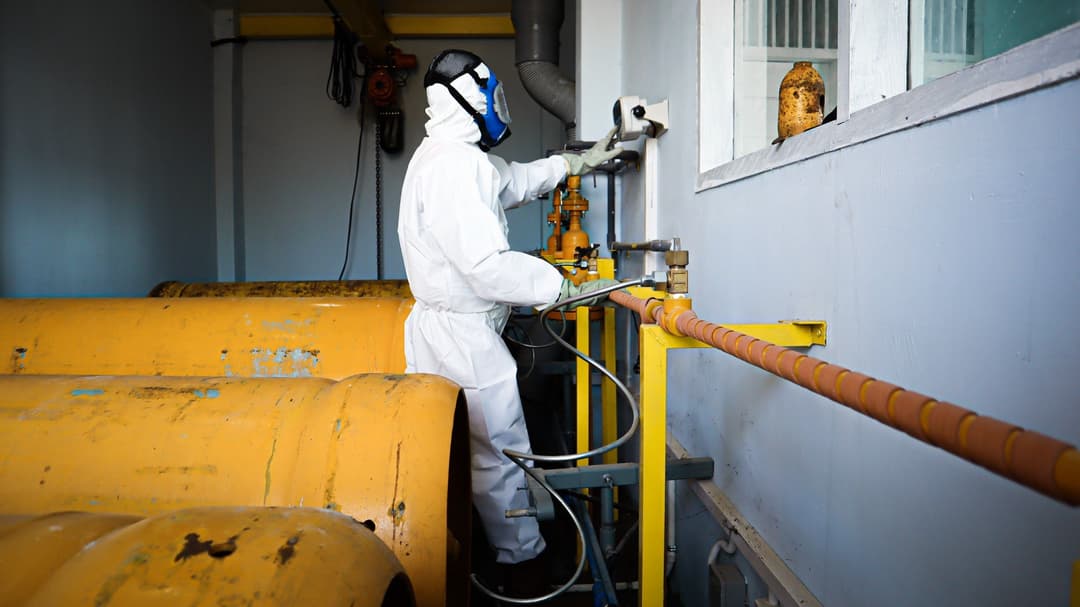
Personal sampling measures airborne contaminants within a worker’s breathing zone during a defined period.
ETLCO coordinates sampling around the selected tasks, work patterns, and target substances to help assess exposure under representative working conditions.
Monitoring programmes may include:
Shift-based sampling to assess time-weighted average exposure.
Short-duration sampling for comparison with short-term limits, where applicable.
Task-specific monitoring during activities with potential exposure.
Assessment of groups of workers performing similar activities.
Repeat sampling to investigate variability or evaluate improvements.
The sampling duration and method are selected to match the assessment objective and the exposure limit being considered.
Area and Task-Based Air Sampling
Area sampling measures contaminants at selected fixed locations within a workplace. It helps identify patterns, investigate potential sources, and assess conditions around specific operations.
Potential monitoring locations include:
Production and processing areas.
Chemical handling and storage areas.
Workshops and maintenance facilities.
Material transfer and loading points.
Locations near potential emission sources.
Occupied areas where air quality concerns have been reported.
Area results complement personal monitoring but do not automatically represent an individual worker’s exposure.
Airborne Contaminants We Assess
ETLCO develops the analytical scope according to the activities, materials, and potential hazards present at the site.
Gases and Vapours
Carbon Dioxide (CO₂).
Nitrogen Oxides (NOₓ), with individual target gases specified as required.
Sulfur Dioxide (SO₂).
Volatile Organic Compounds (VOCs).
Other process-related gases and vapours, subject to method and scope confirmation.
Where individual substances have specific exposure limits, the monitoring programme identifies the compounds requiring measurement rather than relying solely on a general screening result.
Dust and Particulate Matter
Particulate monitoring supports the assessment of airborne dust generated by industrial activities.
The programme defines the relevant particle fraction, such as inhalable or respirable dust, and any substance-specific analysis required. Sampling equipment and media are selected accordingly.
Microbiological Air Sampling
ETLCO offers sampling for airborne bacteria and fungi to support investigations into biological contamination in industrial and occupied environments.
The scope considers the sampling location, site activities, environmental conditions, and laboratory method. Results are interpreted in the context of the investigation and do not, by themselves, establish a health diagnosis or confirm that an environment is free of biological hazards.
Active Air Sampling
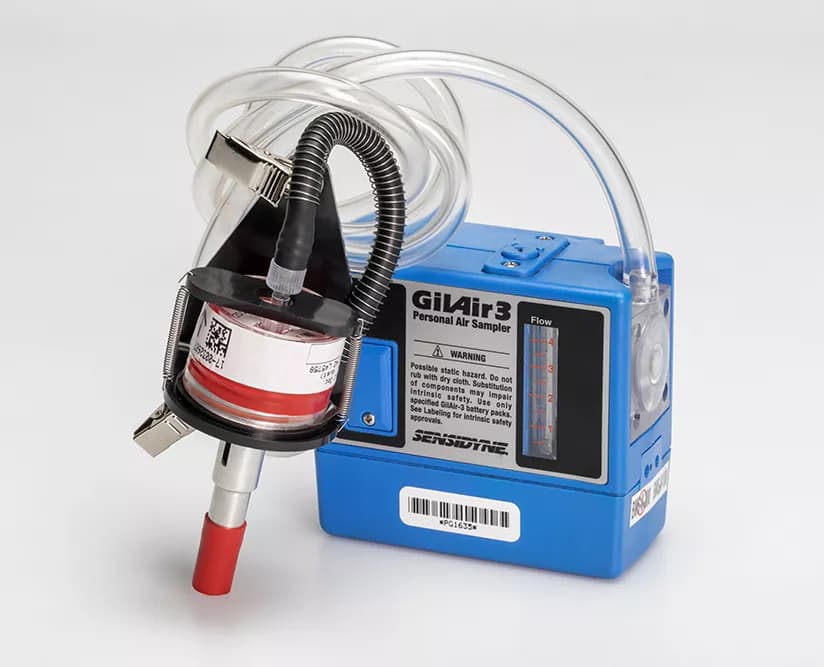
Active sampling uses a pump to draw a controlled volume of air through suitable collection media over a defined period.
Depending on the target contaminant, the collection system may use filters, sorbent tubes, or other method-specific media.
Active sampling supports:
Personal breathing-zone monitoring.
Area and task-specific assessments.
Collection of airborne particles or selected gases and vapours.
Laboratory analysis of specific contaminants.
Defined sampling periods aligned with exposure assessment objectives.
Sampling flow, duration, media, and sample handling requirements are established according to the selected method.
Passive Air Sampling
Passive sampling collects suitable gases or vapours by diffusion onto a sampling medium without using a pump.
It can provide a practical option for personal or area monitoring where a validated sampler is available for the target substance and sampling conditions.
Suitability is assessed according to:
The target chemical.
Expected concentration range.
Required sampling duration.
Environmental conditions.
Sampler performance and analytical method.
Required reporting limits.
Passive sampling is selected where it meets the technical objectives of the assessment.
Supporting Applicable Requirements and Recognised Methods
ETLCO develops monitoring programmes around the requirements relevant to the facility and the purpose of the study.
This may include applicable National Center for Environmental Compliance (NCEC) requirements, Royal Commission (RC) requirements, client specifications, and occupational exposure criteria relevant to the workplace.
NIOSH and OSHA sampling and analytical methods may be used where appropriate to the target contaminant and agreed scope. Where OSHA exposure limits or other international criteria are used for comparison, the report identifies their role as applicable requirements or agreed assessment benchmarks.
Occupational exposure criteria and ambient environmental air quality limits are reviewed separately to ensure the results are compared on the correct basis.
From Site Review to Technical Reporting
ETLCO coordinates the monitoring programme with the client’s operations and health and safety teams.
Review workplace activities: Identify processes, substances, work patterns, existing controls, and reported concerns.
Develop the sampling plan: Select target contaminants, workers or locations, sampling methods, durations, and assessment criteria.
Conduct field sampling: Collect samples and document relevant activities, operating conditions, and field observations.
Analyse and review results: Complete the agreed analysis and relevant quality checks.
Report findings: Present results, comparison criteria, limitations, and recommended follow-up actions within the agreed scope.
Clear Results for Practical Decisions
Depending on the assignment, reports may include:
Sampling objectives and scope.
Locations, tasks, and sampling periods.
Sampling and analytical methods.
Measured concentrations and reporting limits.
Relevant field and laboratory quality control information.
Comparison with agreed exposure criteria.
Observations about operating conditions and existing controls.
Recommendations for further assessment, control review, or repeat monitoring.
These findings help clients prioritise workplace improvements and evaluate the effectiveness of actions taken.
Discuss Your Industrial Hygiene Sampling Requirements
Share your facility location, process descriptions, chemicals or materials used, relevant safety data sheets, work schedules, and the number of workers or areas to be assessed. Include any previous monitoring results, reported concerns, and required assessment criteria.
ETLCO will help define the sampling scope and prepare a technical and commercial proposal tailored to your workplace.