

 English
 العربية
Indoor Air Quality Monitoring Services
Indoor Air Quality Monitoring Services in Saudi Arabia
Understand the air inside your building and make informed decisions for healthier, more comfortable spaces.
ETLCO provides Indoor Air Quality (IAQ) monitoring services to help building owners, facility managers, and businesses assess indoor environmental conditions, investigate air quality concerns, and evaluate corrective measures.
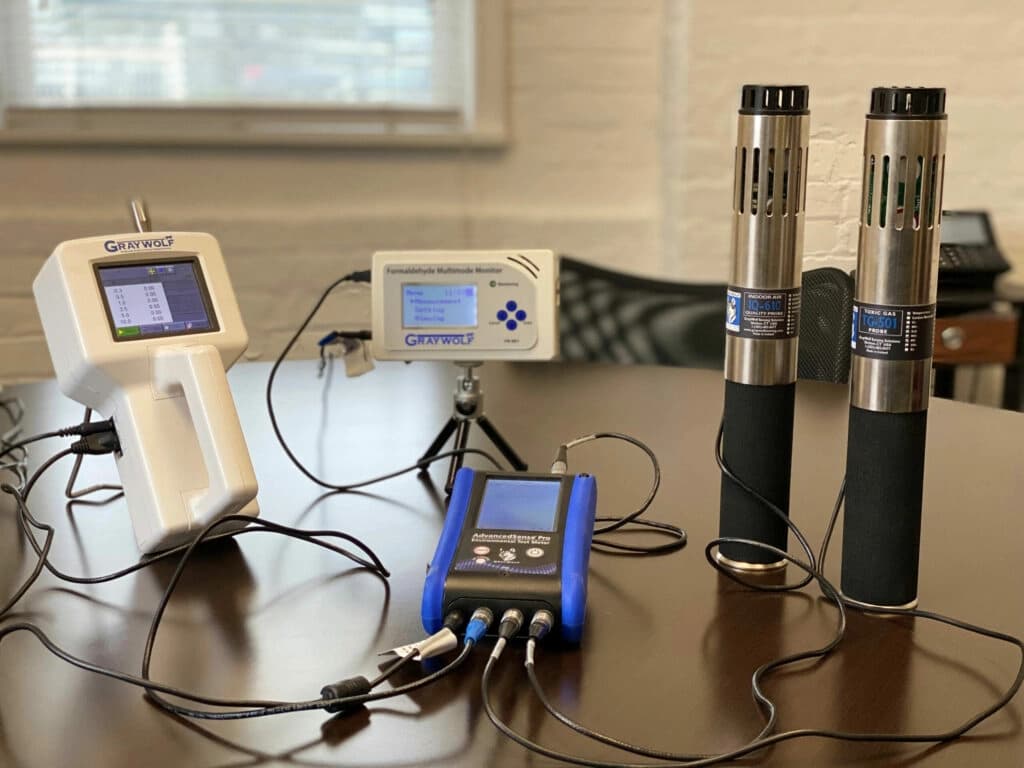
Using GrayWolf handheld instruments with suitable sensors and configurations, we measure selected air quality parameters and collect data to support practical improvements in ventilation, pollutant control, and occupant comfort.
Our monitoring programs are tailored to the building’s use, occupancy, operating conditions, and assessment objectives.
Why Monitor Indoor Air Quality?
Indoor air quality can be influenced by ventilation, outdoor air entering the building, cleaning products, furnishings, maintenance activities, and indoor emission sources.
Monitoring helps clients understand these conditions and identify areas that require further investigation or improvement.
ETLCO’s services support:
Investigation of indoor air quality and odor complaints.
Assessment of pollutant concentrations in occupied spaces.
Evaluation of ventilation-related indicators.
Review of temperature and humidity conditions.
Comparison of conditions across rooms, floors, or operating periods.
Verification of changes following corrective actions.
Indoor Air Quality Parameters
The monitoring scope is selected according to the building, suspected sources, and available instrument configuration.
Gaseous Pollutants and Ventilation Indicators
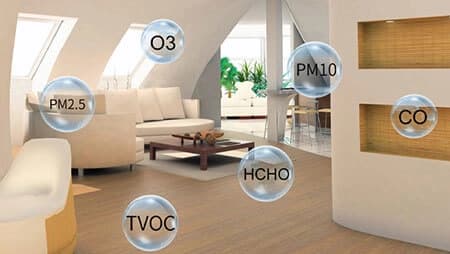
Carbon monoxide (CO): Assessment of potential combustion-related contamination.
Carbon dioxide (CO₂): Monitoring to help evaluate ventilation conditions in relation to occupancy.
Sulfur dioxide (SO₂): Measurement where combustion sources or outdoor pollutant infiltration are relevant.
Nitrogen dioxide (NO₂): Assessment where traffic, fuel-burning equipment, or other combustion sources may affect indoor air.
Ozone (O₃): Monitoring where outdoor air or ozone-generating equipment may contribute to indoor concentrations.
Hydrogen sulfide (H₂S): Targeted investigation where drainage systems, wastewater, or other suspected sources warrant assessment.
Volatile Organic Compounds
Total volatile organic compounds (TVOCs): Screening to identify changes in overall VOC response and support investigations involving cleaning products, coatings, furnishings, or process-related sources.
TVOC screening does not identify individual compounds. Where a specific chemical is suspected, targeted sampling and analysis can be defined separately.
Airborne Particulate Matter
PM2.5: Monitoring of fine airborne particles.
PM10: Monitoring of airborne particles within the PM10 size fraction.
These measurements help assess particulate conditions associated with outdoor infiltration, dust-generating activities, and indoor sources.
Indoor Environmental Conditions
Temperature: Measurement to support assessment of occupant comfort and building operating conditions.
Relative humidity: Monitoring to identify moisture-related conditions that may require further investigation.
Real-Time Monitoring and Data Analysis
ETLCO collects real-time measurements to examine how selected parameters change during the assessment period.
Depending on the agreed scope, monitoring may include measurements at selected locations or data logging over defined periods. Results can be reviewed alongside occupancy, ventilation operation, cleaning schedules, and other relevant activities.
This approach helps identify patterns, investigate possible sources, and determine where additional assessment may be useful.
A Monitoring Program Designed for Your Building
ETLCO coordinates the assessment with the client to select representative locations and monitoring periods.
Our approach can include:
Reviewing the building’s use and reported concerns.
Selecting parameters relevant to the suspected sources.
Identifying monitoring locations and assessment durations.
Recording occupancy and operating conditions.
Reviewing results against agreed assessment criteria.
Conducting follow-up measurements after corrective actions.
CO₂ measurements are interpreted alongside occupancy and ventilation information; they do not provide a complete assessment of indoor air quality on their own.
Supporting Applicable Requirements and Project Criteria
ETLCO helps clients assess results against criteria appropriate to the building, its occupants, and the purpose of the study.
Applicable local requirements, client specifications, and recognized guidance are identified when defining the scope. Occupational exposure criteria are considered where relevant to workplace assessments, while general indoor environmental evaluations use criteria suited to the setting.
The report identifies the assessment basis so that findings can be understood and used appropriately.
Services for a Range of Indoor Environments
Our IAQ monitoring services support:
Offices and corporate buildings.
Commercial premises and retail spaces.
Schools and educational facilities.
Hotels and hospitality facilities.
Residential buildings and shared indoor areas.
Industrial offices and enclosed workspaces.
Buildings undergoing renovation or investigating occupant complaints.
Evaluate the Effectiveness of Corrective Measures
After ventilation adjustments, source removal, cleaning, or other agreed interventions, repeat monitoring can help assess changes in indoor conditions.
Where practical, follow-up assessments use comparable locations and operating conditions to provide a meaningful basis for reviewing improvement.
Clear Reports for Facility Management
Depending on the agreed scope, ETLCO’s reports may include:
Monitoring locations, dates, and durations.
Measured parameters and instrument details.
Results, units, and recorded trends.
Relevant occupancy and operating observations.
Comparison with agreed assessment criteria.
Findings requiring further investigation.
Recommendations for follow-up monitoring or targeted testing.
Our reporting helps facility teams prioritize actions and maintain documented evidence of their indoor air quality assessments.
Discuss Your Indoor Air Quality Requirements
Share your building location, type of occupancy, areas of concern, and any reported odors or air quality complaints. Include the required parameters, assessment duration, and relevant project specifications where available.
ETLCO will help define a suitable monitoring program and prepare a technical and commercial proposal for your facility.